Quieter shots, less felt recoil, and a more comfortable first experience at the range. There’s a reason this conversation keeps coming up at Gunprime.
I've had a version of the same conversation with several dads this hunting season. They're buying hunting rifles for their kids. We talk about fit, caliber, and how to make that first experience enjoyable. And before long, we end up talking about suppressors.
So far, those conversations keep ending the same way: they decide to add a suppressor.
One dad recently bought a Ruger American Gen II and put a suppressor on it. He took his kid shooting over the weekend, and they had a blast. Just a quieter one.
Later, he sent me a text:
“This thing has zero recoil.”
Now, obviously, the rifle doesn't literally have zero recoil. But I knew exactly what he meant. The gun felt soft and comfortable to shoot, and they had a great time together.
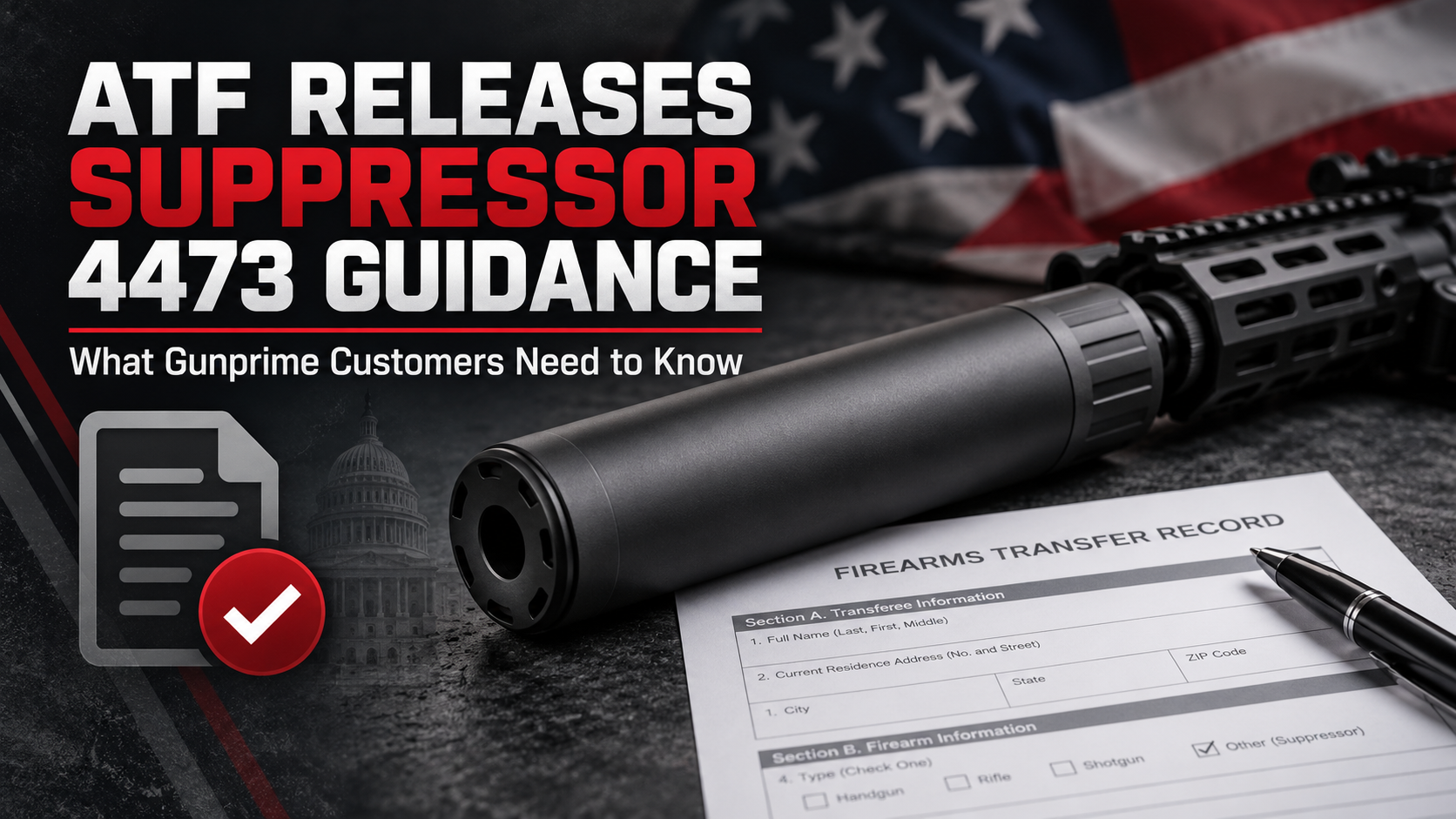
That text sums up something I wish more people understood: a suppressor isn't just about making a gun quieter. It can make shooting a whole lot more enjoyable.
1. Less Noise Changes the Experience
A gunshot is loud. Really loud. If you've ever watched a new shooter tense up before pulling the trigger, there's a good chance the anticipation of that blast had something to do with it.
A suppressor reduces the muzzle blast by slowing and managing the high-pressure gases leaving the barrel. In one published study, researchers measured reductions of 17–24 decibels at the shooter's ears, depending on the firearm and ammunition. That's a meaningful difference. Read the published hearing study.
No, it doesn't make a hunting rifle sound like a movie prop. Supersonic bullets still create a sharp crack, and suppressed gunfire can still damage hearing. Keep wearing appropriate hearing protection, especially when you're teaching kids to shoot.
But less blast means one less thing competing for a new shooter's attention.
2. Less Felt Recoil Is the Benefit Parents Notice
Noise is the obvious advantage. Recoil is the one that tends to surprise people.
A suppressor can reduce felt recoil by managing escaping gases, and the extra weight at the muzzle can change how the rifle moves during the shot. How much difference you notice depends on the rifle, cartridge, and suppressor.
That's why I smiled at the dad's “zero recoil” text. He wasn't giving me a laboratory measurement. He was telling me that his kid's new hunting rifle was much more pleasant to shoot than he expected.
For a young hunter, that matters. If the rifle feels manageable, it's easier to focus on a steady position, safe handling, and a smooth trigger press instead of bracing for the next shot.
There's a tradeoff worth remembering: suppressors add length and weight to the front of the rifle. Especially for a smaller shooter, fit and balance still matter.
3. Can a Suppressor Help You Shoot More Accurately?
Sometimes, yes—but not because it magically makes every barrel more precise.
When a rifle is loud and kicks hard, it's easy to anticipate the shot. A flinch, a jerk of the trigger, or a moment of tension can move a shot away from where you intended.
Reduce some of that noise and recoil, and the shooter may find it easier to stay relaxed, maintain a sight picture, and follow through. That's an improvement in practical shooting, even if the rifle itself hasn't changed.
The suppressor also changes the weight and vibration characteristics of the barrel, which can affect group size. Some rifle-and-suppressor combinations shoot tighter groups; others show little change, and some can shoot worse. Recent field testing has documented all of those possibilities. See the accuracy testing.
And one important detail for hunters: a suppressor can shift your point of impact. Confirm your zero with the exact setup you'll take into the field.
4. What Happens to Bullet Velocity?
This question comes up a lot: Doesn't putting something on the end of the barrel slow the bullet down?
Usually, no. The bullet travels through the suppressor without touching its internal parts.
Some tests have found small velocity gains—sometimes around 15–25 feet per second—while many combinations show almost no meaningful difference. It's not enough to turn one cartridge into another, but it means you're generally not trading away bullet speed to get the comfort benefits. Learn more about suppressors and velocity.
5. Less Concussion, Less Flash, and a Better Day Together
Suppressors can also reduce muzzle flash and the concussive blast felt by the shooter and people nearby. Anyone who's stood next to a rifle with an aggressive muzzle brake knows that blast can be unpleasant.
That may sound like a small thing until you're introducing a kid to hunting. The first trips to the range shouldn't be remembered mainly for sore shoulders and a startling bang.
They should be remembered for learning something new, building confidence, and having fun with Dad or Mom.
Are Suppressors Worth It on a Hunting Rifle?
For plenty of families, the combination of less noise, less felt recoil, and a more comfortable shooting experience makes a suppressor well worth considering.
They're not perfect. They add weight and length, can get extremely hot, require proper compatibility and maintenance, and remain subject to applicable laws and transfer requirements. You'll also want to verify your rifle's zero after installing one.
But I keep thinking about that dad and his Ruger American Gen II. He didn't text me a group-size measurement or a chart of decibel readings.
He texted me because he and his kid had a blast shooting together.
That might be the best benefit of all.